


Sheinbaum: Mexico is a “symbol of peace and self-determination”
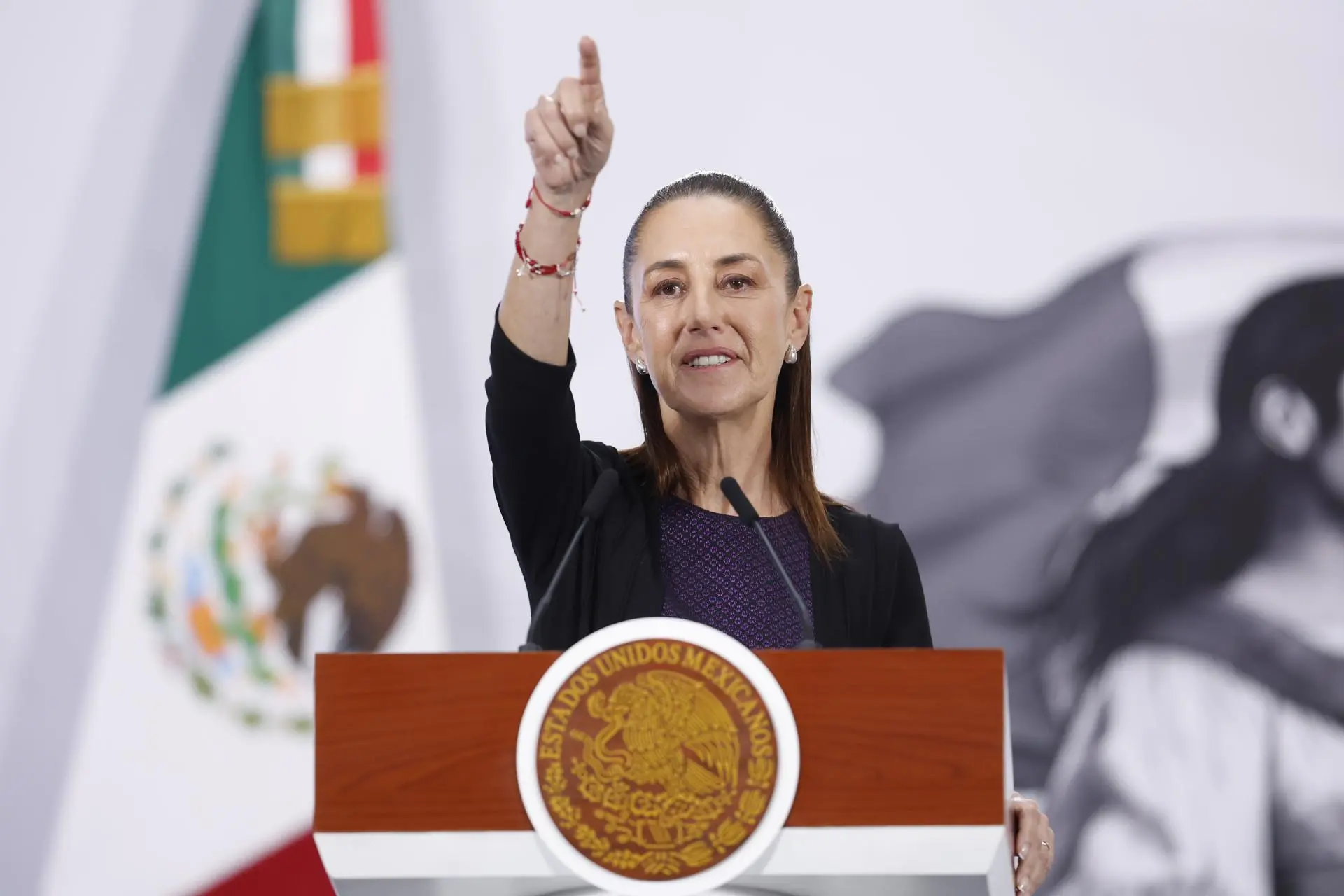
Mexican President Claudia Sheinbaum led the annual military parade for the first time on Tuesday, September 16, as the first woman to command the Armed Forces.
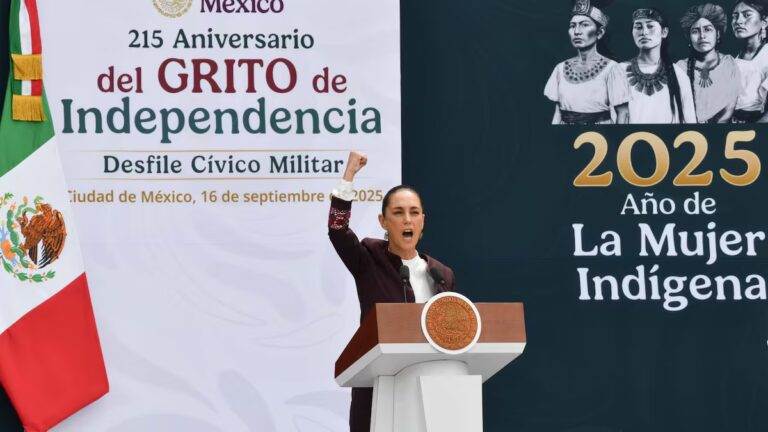
President Claudia Sheinbaum reaffirmed Mexico’s commitment to peace, self-determination, and national sovereignty. Photo: EFE.
September 16, 2025 Hour: 9:14 pm
🔗 Comparte este artículo
In a speech from the Zócalo square in front of the National Palace, Mexican President Claudia Sheinbaum reaffirmed Mexico’s commitment to peace, self-determination, and national sovereignty, inaugurating the annual military parade commemorating the first cry for independence in 1810.
“Let us also not forget that Mexico will always be a symbol of peace and global brotherhood, committed to cooperation, mutual respect, and the undisputed defense of the self-determination of peoples,” Sheinbaum said, quoting Benito Juárez’s famous phrase: “Respect for the rights of others is peace.”
RELATED:
Mexico’s Independence Day Celebrated with Sheinbaum as First Female President Leading the Ceremony
The president also emphasized Mexico’s independence from any foreign power, stressing that “the independence, freedom, and sovereignty of Mexico means that no foreign power decides for us.”
This statement was met with applause by her cabinet, amid tensions with the United States over security and trade issues.
The president recalled that in 2025, she proposed a reform bill that was approved by the ruling party’s supermajority in Congress against any foreign intervention.
In this regard, she noted that the changes to the Constitution establish that “under no circumstances will interventions, interference, or any other act from abroad that is harmful to the integrity, independence, and sovereignty of the nation be accepted.”
The text opposes any foreign intervention that represents threats, such as “coups d’état, interference in elections, or violations of Mexican territory, whether by land, sea, or airspace.”
Sheinbaum recalled that Mexico won its independence in 1821, but had to reaffirm it in 1867, after the French invasion. “We must never forget that our independence, freedom, and sovereignty are defended every day,” she emphasized.
The Mexican president maintained that these principles are defended peacefully, “advancing the transformation that honors the best of our history.” Sheinbaum evoked Vicente Guerrero, the first president of African American origin, as a “son of the South and the indomitable heart of the homeland,” recalling that “Guerrero showed us that true patriotism does not allow for concessions, that freedom is not negotiable, and that sovereignty is not for sale,” the president exclaimed, accompanied by her entire cabinet.
Sheinbaum affirmed that the ruling party seeks freedom, sovereignty, democracy, justice, and equality, to “open the paths to well-being and development for all, but for the good of all, putting the poor first.”
The Head of State criticized the fact that some opponents of her administration have sought support from foreign powers to request interference. “The election to the Judiciary (held last June) gave the people the mandate to be an impartial, independent system close to the citizenry,” she emphasized.
Sheinbaum finally assured that the new courts and tribunals have the mandate to ensure that justice is equal for all, “without privileges or exceptions.”
To commemorate the anniversary of its independence, Mexico holds an annual military parade on September 16, complementing the traditional “El Grito” ceremony the night before. In this event, members of the Mexican armed forces—the Army, Navy, Air Force, and National Guard—parade in honor of their supreme commander, the President of the Republic.
The Ministry of National Defense (Sedena) notes that this parade also represents a reaffirmation of the loyalty and commitment of the armed forces to the protection of the Mexican people.
This declaration takes on particular significance in 2025, as it marks the first time in 215 years of history that a woman delivers the speech marking the beginning of the national holidays.
National heroes such as Miguel Hidalgo, José María Morelos, Ignacio Allende, and Vicente Guerrero took center stage in the speeches. However, Sheinbaum made history by also paying tribute to insurgent women such as Josefa Ortiz de Domínguez, Leona Vicario, Gertrudis Bocanegra, and Manuela Molina “La Barragana.”
“Long live Independence!” was the phrase with which Sheinbaum opened the ceremony, before chanting the traditional cheers in honor of the figures who shaped the insurgent movement.
The capital’s Zócalo, the country’s political and cultural epicenter, was transformed into a vibrant stage where citizens, who had waited for hours, celebrated an unprecedented chapter in national life.
Origin of the Cry
The Cry of Dolores, attributed to the priest Miguel Hidalgo y Costilla, took place in the early morning of September 16, 1810, in the town of Dolores, Guanajuato. This call to rise up against Spanish rule marked the beginning of the independence movement.
Hidalgo, influenced by the libertarian ideas that had been circulating since 1808, participated in conspiracies organized in Querétaro with Miguel Domínguez and Josefa Ortiz de Domínguez. Although the insurrection was planned for December 1810, it was brought forward after being discovered by the viceregal authorities. Thanks to the warning from the corregidora (magistrate), the insurgents decided to act immediately. At dawn on the 16th, Hidalgo rang the parish bell and, in front of a crowd gathered in the atrium, issued the historic call that gave rise to Mexican Independence.
Author: HGV
Source: Telesur